UAS Weekly Briefing — April 24, 2026: DJI's $1.5 Billion Problem, the Lito Drones Americans Can't Buy, and the FAA's New Fast-Track Enforcement Program
DJI — the world's largest drone manufacturer — just put a dollar figure on what the U.S. government's crackdown is costing them. And then they launched two brand-new drones that Americans can't buy. Meanwhile, a company most people have never heard of is quietly positioning itself as DJI's American replacement — but nobody can confirm whether it's actually independent from DJI at all. The FAA just launched a brand-new enforcement program that lets first-time violators trade their appeal rights for smaller fines. And the drone job market is shifting in ways that should change how you think about building a career in this industry.
Five stories. All connected. Here's what happened this week and what it means for you.
Prefer audio? Listen to the full podcast below or open the episode page.
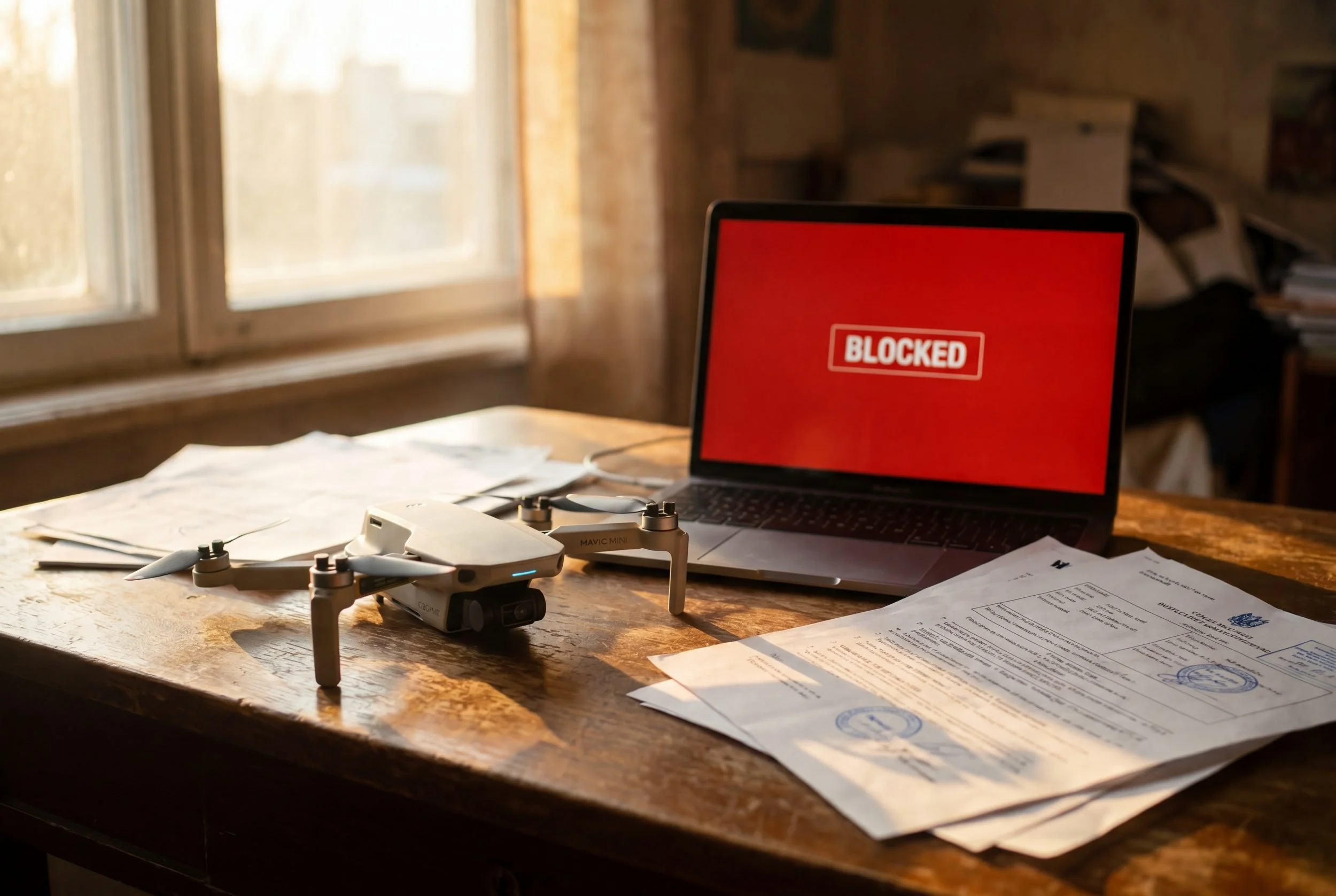
DJI Says the FCC Ban Will Cost It $1.5 Billion This Year — and Block 25 New Products
DJI filed documents this week revealing exactly how much the FCC's crackdown is costing them: an estimated $1.5 billion in lost U.S. revenue for 2026 alone, with 25 new product launches — drones, cameras, and accessories — blocked from reaching American consumers.
Here's the backstory. In late December 2025, the Federal Communications Commission — the government agency that controls which electronic devices are allowed to transmit radio signals in the United States — added all foreign-made drones and their critical components to its "Covered List." That's essentially a banned list. If your company is on it, the FCC won't approve your products for sale in the U.S.
DJI, which is based in China, landed squarely on that list. The practical effect: any new DJI product that needs FCC authorization to operate — which is virtually all of them, since drones use radio frequencies to communicate between the controller and the aircraft — cannot legally be sold or imported into the United States.
Products that were already approved before the ban can still be sold and used. Your existing DJI drone isn't suddenly illegal. But anything new? Blocked at the door.
The $1.5 billion figure and the 25-product count come directly from DJI's own legal filings as part of their ongoing challenge to the FCC's decision. Whether or not DJI ultimately wins that fight, the immediate reality is clear: American drone buyers are being cut off from the largest and most popular drone manufacturer on the planet — and DJI is losing the biggest market in the world.
Red Raven's Take: This is the most concrete number we've seen on the actual financial impact of the FCC ban. $1.5 billion isn't a projection or an industry estimate — it's DJI's own figure from their legal filings. For operators and agencies, the takeaway hasn't changed: your current DJI equipment still works, but plan your next purchase assuming DJI won't be an option. And if you're building a drone program, your platform selection strategy just became one of the most important decisions in the entire process — because choosing the wrong hardware now could mean a dead end in 12 months.
Read more: 25 new DJI launches blocked by FCC, $1.5 billion at stake — DroneDJ
DJI Launches Two New Beginner Drones — But Americans Can't Buy Them
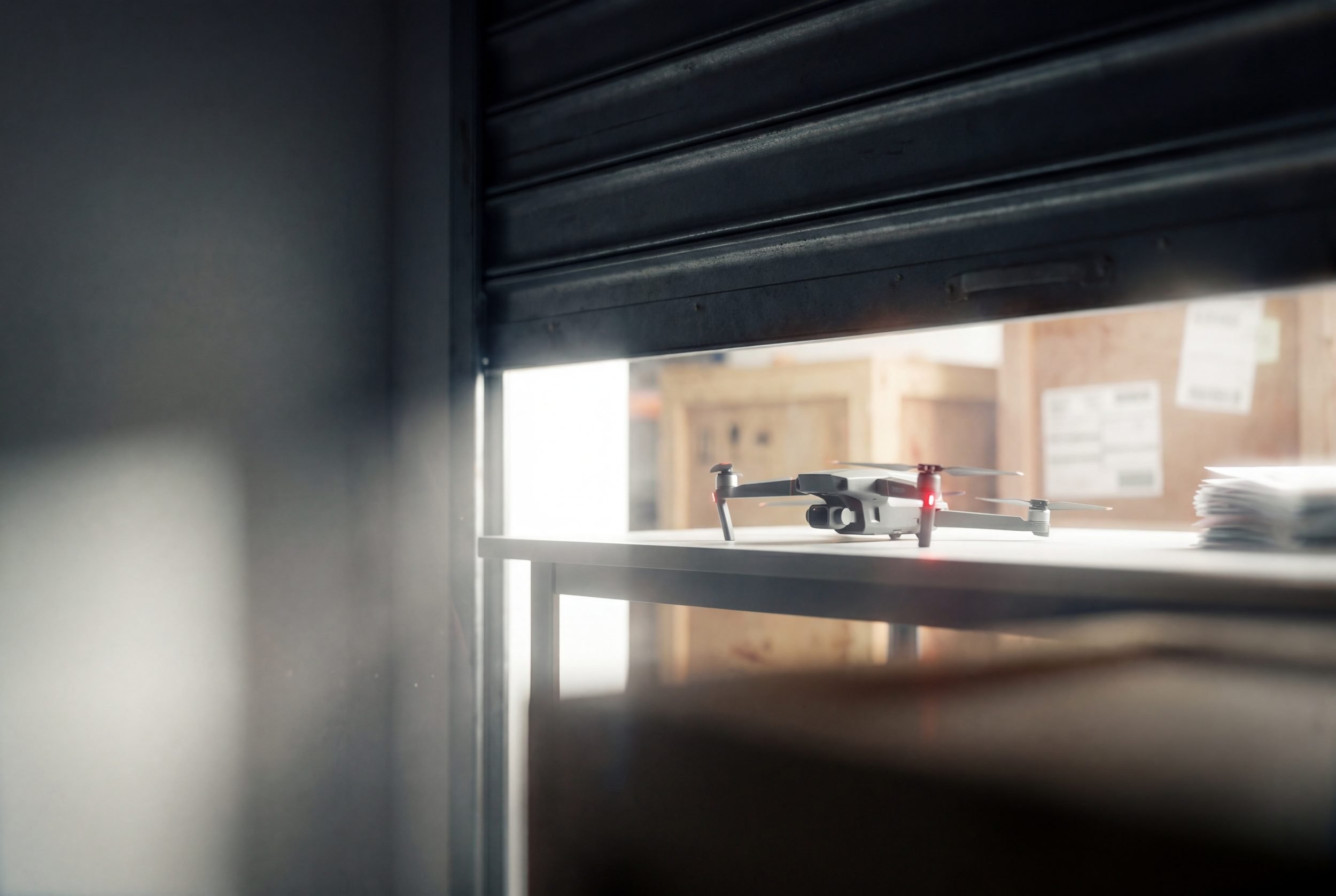
On April 23 — literally the day after those $1.5 billion loss figures came out — DJI launched two brand-new beginner drones: the Lito 1 and the Lito X1 (pronounced "Lee-toh"). They're lightweight, affordable, designed for first-time flyers, and available in Europe, the UK, and most international markets.
Not the United States.
The Lito 1 is DJI's new entry point — a sub-249-gram drone (that means it weighs less than half a pound, which matters because drones under that weight have fewer FAA registration requirements) with a capable camera system aimed at people buying their very first drone. The Lito X1 steps it up with better sensors, obstacle avoidance, and more advanced flight features, while staying under that same 249-gram weight limit.
Both replace the aging DJI Mini 4K, which has been DJI's budget offering for a while. And both are blocked from the U.S. market because DJI's FCC authorization applications are stuck in limbo — a direct consequence of the Covered List ban we just talked about.
So DJI keeps building competitive products. They keep launching globally. And American consumers keep getting left out.
Red Raven's Take: The Lito line is clearly DJI's answer to the beginner market — and they're priced to dominate it everywhere they can actually sell. The frustrating part for American buyers is that there's no domestic equivalent at this price point and feature set yet. If you're looking for a starter drone right now in the U.S., your options are more limited and more expensive than they are anywhere else in the world. For our Part 107 students — if you're shopping for your first drone and you're based in the U.S., get certified first, then make your hardware decision based on what's actually available and supported here.
Read more: DJI launches two new affordable Lito drones, America gets none — DroneDJ
Skyrover Wants to Replace DJI in America — But Is It Actually DJI in Disguise?
If DJI can't sell new drones in the United States, somebody else is going to try to fill that gap. Enter Skyrover — a brand that most American drone buyers had never heard of until a few weeks ago, and one that's now generating a lot of buzz and a lot of questions.
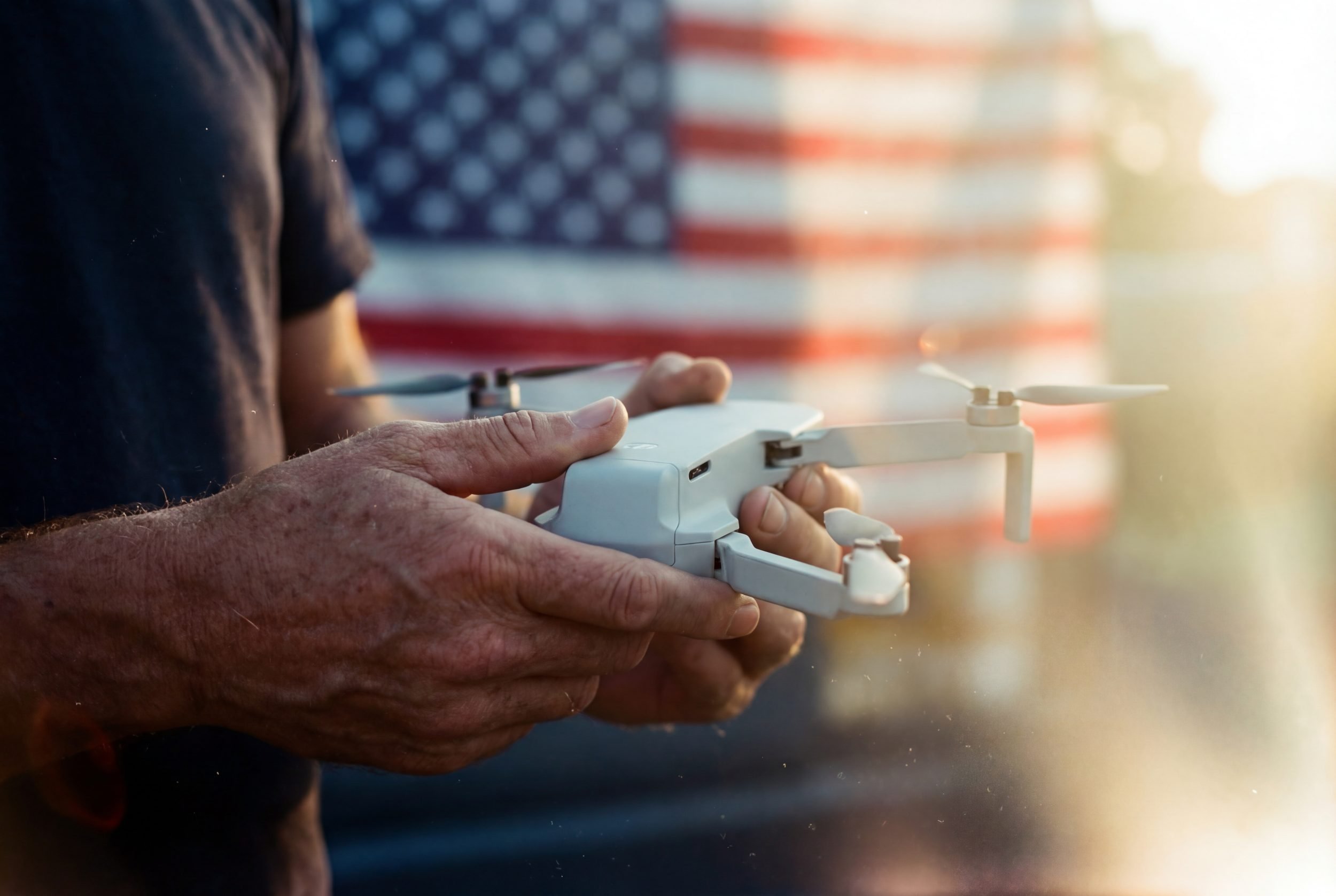
Skyrover's pitch is simple: DJI-level features at DJI-level prices, but with U.S. market access. Their S1 drone costs $289 and comes with a Sony sensor capable of 48-megapixel photos and 4K video. The X1 — their higher-end model at $499 — adds 360-degree obstacle avoidance, AI tracking, and extended transmission range. Both are sub-249 grams.
The company says it's committed to staying in the U.S. market long-term and is even exploring U.S.-based manufacturing and supply chain operations. On paper, it sounds like exactly what American buyers need right now.
Here's the problem: nobody can confirm whether Skyrover is actually independent from DJI.
Multiple outlets have raised questions about the company's origins, its supply chain, and its potential corporate ties to DJI. Neither DJI nor Skyrover has confirmed or denied any formal relationship. Some industry observers have pointed out similarities in hardware design and software architecture. Others have speculated that Skyrover could be a DJI sub-brand attempting to sidestep the FCC ban — essentially the same technology under a different name.
None of that has been proven. But none of it has been disproven either.
Red Raven's Take: We're watching Skyrover closely, and you should too — but with healthy skepticism. If they're legitimate and truly independent, they could fill a real gap in the U.S. market. If they're a DJI rebrand trying to get around the ban, that's a regulatory and legal risk that could blow up on early adopters. For agencies and enterprise teams building drone programs, we'd recommend waiting for clarity before committing to a platform that might not have a stable future in the U.S. For hobbyists and new pilots, it's less risky — but do your homework. If you're building a drone program, platform selection is a strategic decision, not a shopping decision.
Read more: Skyrover wants to replace DJI drones in America: Here's its plan — DroneDJ | Skyrover Pledges to Stay in the US, But Its DJI Ties Raise Questions — DroneXL
The Drone Job Market Is Shifting — Digital Twins Are the Fastest-Growing Mission Type
If you're thinking about a career in drones — or you're already flying commercially and wondering where the money is going — this week's job market data is worth your attention.
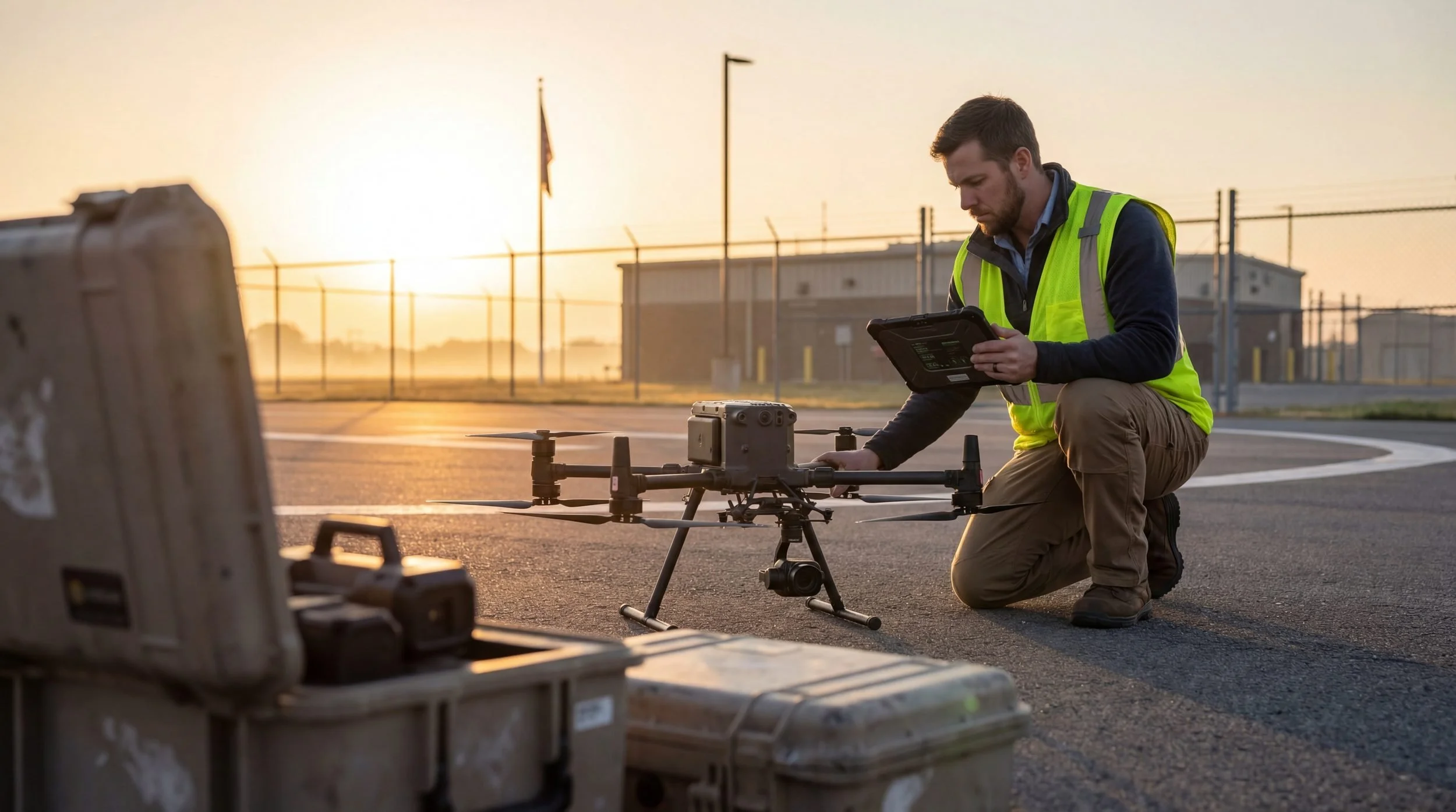
According to a report from The Drone Girl, the drone job market in 2026 looks very different from what most people expect. The biggest growth isn't in real estate photography or wedding videos — those markets are saturated. The fastest-growing mission type is something called digital twin capture.
A digital twin is a highly detailed 3D virtual replica of a real-world asset — a building, a construction site, a solar farm, a section of power line. Drone pilots capture hundreds or thousands of overlapping images of the asset from precise, repeatable flight paths. Those images get processed into a 3D model that engineers, project managers, and maintenance teams can interact with remotely — rotating it, zooming in, measuring distances, and tracking changes over time without ever visiting the physical site.
Companies like FlyGuys — which operates a nationwide network of FAA-certified drone pilots — completed over 40,000 missions across all 50 states in 2025 and projects roughly 70,000 in 2026. The demand is being driven by construction companies, energy providers, and infrastructure operators who need regular, standardized data capture across large portfolios of assets.
The key insight: the pilots landing the best-paying drone jobs in 2026 aren't photographers. They're data capture specialists flying for AI companies, mapping solar installations, building digital twins of construction projects, and inspecting critical infrastructure.
Red Raven's Take: This is the shift we've been talking about. The commercial drone industry is moving from "cool aerial photos" to "critical operational data." If you're a Part 107 pilot and you're still thinking of your drone as a camera, you're leaving money on the table. The highest-demand skills now are precision flight planning, repeatable data capture workflows, and understanding what your clients actually need from the imagery — not just how to fly. That's exactly what our training programs are built around: turning pilots into operators who can deliver data, not just footage. And if you're not Part 107 certified yet, this is another reason to get it done — because the opportunities are real, and they're growing.
Read more: What is the state of drone jobs in 2026? It's a gig economy — The Drone Girl

The FAA Just Launched a Fast-Track Enforcement Program for Drone Pilots
If you fly a drone commercially — or even recreationally — this one matters. The FAA just launched a new enforcement program called DETER, which stands for Drone Expedited and Targeted Enforcement Response. It went into effect on April 17, and it changes how the agency handles drone rule violations.
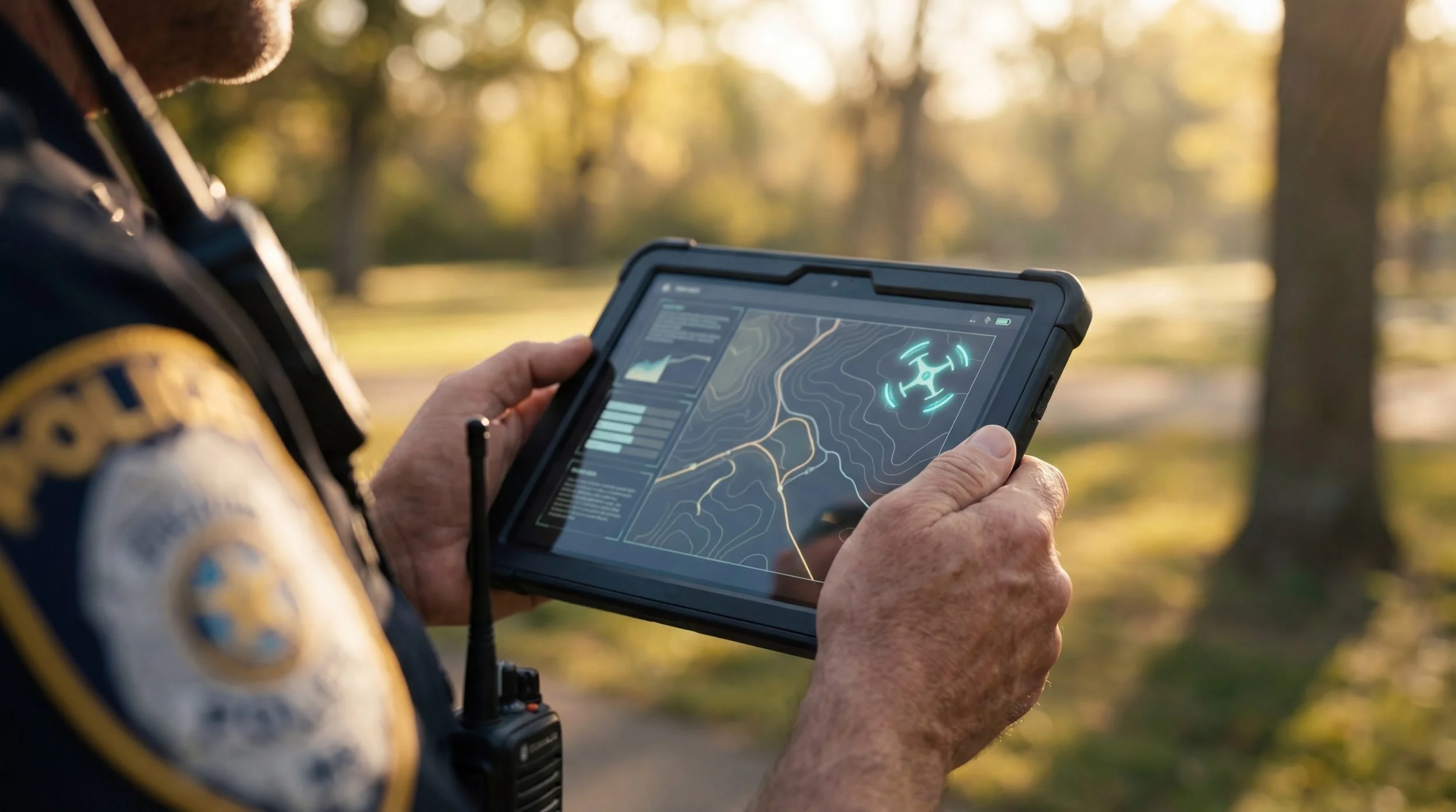
Here's how it works. If you get caught violating an FAA drone regulation — flying in restricted airspace without authorization, flying over people without the right waiver, ignoring altitude limits, that kind of thing — the FAA can now offer you a deal: accept a reduced fine or a shorter suspension of your pilot certificate, resolve the case quickly, and move on. The catch? You have to admit you did it, and you give up your right to appeal. Permanently.
You get 10 days to decide. If you take the deal, you pay the fine (or serve the suspension), the violation goes on your record, and it's over. If you don't, you go through the standard enforcement process — which can take months, cost more in legal fees, and result in a bigger penalty.
DETER only applies to first-time individual violators with what the FAA considers less serious operational violations. It does NOT apply to anyone flying under the influence, carrying weapons on a drone, violating temporary flight restrictions (TFRs), or engaging in any kind of criminal activity. Those cases go straight to full enforcement.
Here's the context that makes this especially relevant right now: the FAA explicitly said DETER will support enforcement around the 2026 FIFA World Cup, which runs from June 12 through July 19 across multiple U.S. cities. That means tighter drone monitoring around stadiums, crowds, transportation hubs, and the temporary flight restriction zones that will be set up around every venue. If you're a drone pilot operating anywhere near a World Cup city this summer, you need to know exactly where the restricted airspace is and follow the rules to the letter.
For reference, the FAA can fine drone operators up to $75,000 per violation under federal law. In recent years, actual fines have ranged from about $1,700 to nearly $37,000.
Red Raven's Take: DETER is a signal that the FAA is done issuing warnings. For Part 107 pilots, this shouldn't change anything about how you operate — you should already be following the rules. But it's a reminder that compliance isn't optional, and the consequences of cutting corners are getting faster and more concrete. For agencies and companies building drone programs, this is exactly why proper training and SOP development matter. A single violation from an undertrained pilot can put your entire program at risk. And if you're studying for Part 107, understand that the FAA takes this seriously — knowing the rules isn't just about passing the test, it's about staying legal once you start flying.
Read more: FAA launches quick-settlement path for drone rule breakers — DroneDJ | FAA DETER Program Lets First-Time Drone Violators Trade Appeal Rights For Smaller Fines — DroneXL
The Bottom Line
The DJI situation is creating a genuine vacuum in the American drone market — and it's not clear yet who's going to fill it. DJI keeps building products the rest of the world can buy. Newcomers like Skyrover are trying to move in, but the questions about their independence are real. And while the hardware landscape sorts itself out, the commercial opportunity for trained, certified drone pilots keeps growing — especially in data-heavy fields like digital twins, infrastructure inspection, and energy.
Add the FAA's new DETER enforcement program to the mix, and the message is clear: the era of casual, unregulated drone flying is over. The industry is professionalizing — in hardware, in training, in enforcement, and in the kinds of jobs that are available.
The pilots and programs that will come out ahead aren't the ones waiting for the hardware question to be answered. They're the ones building skills, getting certified, and positioning themselves to fly whatever platforms end up dominating the U.S. market.
-
Can I still buy DJI drones in the United States?
Yes — models that received FCC authorization before the December 2025 ban can still be legally sold and used. What's blocked are new products that haven't been approved yet. Your existing DJI drone is not affected.
What is the DJI Lito drone?
The Lito (pronounced "Lee-toh") is DJI's new beginner drone line, launched April 23, 2026. It includes two models — the Lito 1 and Lito X1 — both under 249 grams. They're available globally but not in the United States due to the FCC ban.
Is Skyrover a DJI company?
That hasn't been confirmed or denied by either company. Multiple industry outlets have raised questions about potential ties between Skyrover and DJI, but there's no official statement from either side. Buyers should do their own research before committing.
What is a digital twin in the drone industry?
A digital twin is a highly detailed 3D virtual replica of a real-world asset — like a building, bridge, or solar farm — built from drone-captured imagery. Engineers and project managers use digital twins to inspect, measure, and monitor assets remotely without physically visiting the site.
What kind of drone jobs pay the most in 2026?
The highest-paying drone jobs in 2026 are in data capture for digital twins, infrastructure inspection, solar farm mapping, and AI data pipeline work. Traditional drone photography work like real estate and weddings has become more saturated and competitive.
What is the FAA DETER program?
DETER stands for Drone Expedited and Targeted Enforcement Response. It's a new FAA program that offers first-time drone regulation violators reduced fines or shorter certificate suspensions in exchange for admitting the violation and waiving their right to appeal. It went into effect April 17, 2026.
Can the FAA fine me for flying my drone wrong?
Yes. Under federal law, the FAA can fine drone operators up to $75,000 per violation. Recent enforcement actions have resulted in fines ranging from about $1,700 to nearly $37,000. The new DETER program offers reduced penalties for first-time violators who settle quickly.
Do I need a Part 107 license to get a drone job?
Yes. The FAA Part 107 Remote Pilot Certificate is required for any commercial drone operation in the United States. It's the legal minimum — and most employers and clients require it before they'll hire you. Learn more about getting certified here.
Links & Resources
FAA Part 107 Certification Course: https://www.redravenuas.com/part107
UAS Program Development & Consulting: https://www.redravenuas.com/consulting
On-Site UAS Training: https://www.redravenuas.com/training
Red Raven UAS Blog: https://www.redravenuas.com/blog
Drone Ban Update: https://www.redravenuas.com/blog/fcc-drone-ban-update
About Red Raven UAS
Red Raven UAS helps public safety agencies, government teams, utility operators, energy companies, and infrastructure organizations build drone programs that actually work in the field.
We focus on the parts of a UAS program that matter after the aircraft comes out of the box: pilot training, FAA compliance, SOP development, mission workflows, data handoff, risk management, and long-term program strategy. No hardware sales. No manufacturer hype. No one-size-fits-all curriculum.
Our team brings together decades of real-world operational experience in public safety aviation, commercial drone operations, training, and UAS program development. From initial program planning through on-site instruction, program assessment, and workflow design, Red Raven gives teams the structure they need to deploy drones safely, legally, and effectively.
Explore More